
Top Smart Building Technologies Transforming Commercial Real Estate in 2025: Leveraging AI for Facility Management
- James W.
- Feb 2
- 3 min read
Updated: May 21
Summary
As commercial real estate evolves in 2025, integrating AI technologies is becoming essential for optimizing building lifecycle management, enhancing sustainability, and automating smart building operations. Key players, like Cognitive Corp, are at the forefront of this transformation, utilizing advanced tools such as Microsoft Azure AI and Cognitive Autonomous Agents to create competitive advantages in the real estate sector.
Introduction
The integration of AI in commercial real estate is reshaping the management and operation of buildings in profound ways. With the increasing focus on sustainability and operational efficiency, smart building technologies employ AI to enhance every phase of the building lifecycle—from construction and maintenance to energy management and occupant experience. As we move toward 2025, grasping these technological advancements is vital for professionals aiming to thrive in an evolving commercial real estate landscape.
AI-Driven Technologies in Facility Management
AI technologies play a pivotal role in modern facility management. Notable solutions include:
Microsoft Azure AI: This robust cloud platform offers advanced analytics and machine learning capabilities, enabling real estate operators to process substantial building data effectively. Its applications, particularly in predictive maintenance and energy optimization, are setting new industry benchmarks.
Cognitive Autonomous Agents: Developed by Cognitive Corp, these AI systems autonomously manage various building functions. By learning from occupant behavior, they optimize energy use and enhance comfort, making them integral to contemporary smart building configurations.
Case Studies
Exploring successful applications of AI in commercial real estate provides insights on the tangible benefits and operational improvements these technologies can yield:
CBRE: By deploying AI-powered facilities management solutions across over 1 billion square feet, CBRE illustrates how AI can streamline operations and significantly reduce costs, showcasing a compelling case for the adoption of advanced technologies. CBRE Press Release
Benefits and Challenges of AI Integration
Integrating AI technologies in building management systems yields several benefits, including:
Enhanced operational efficiency
Significant cost reductions
Improved sustainability and reduced carbon emissions
However, challenges also exist, and addressing these is essential for successful implementation:
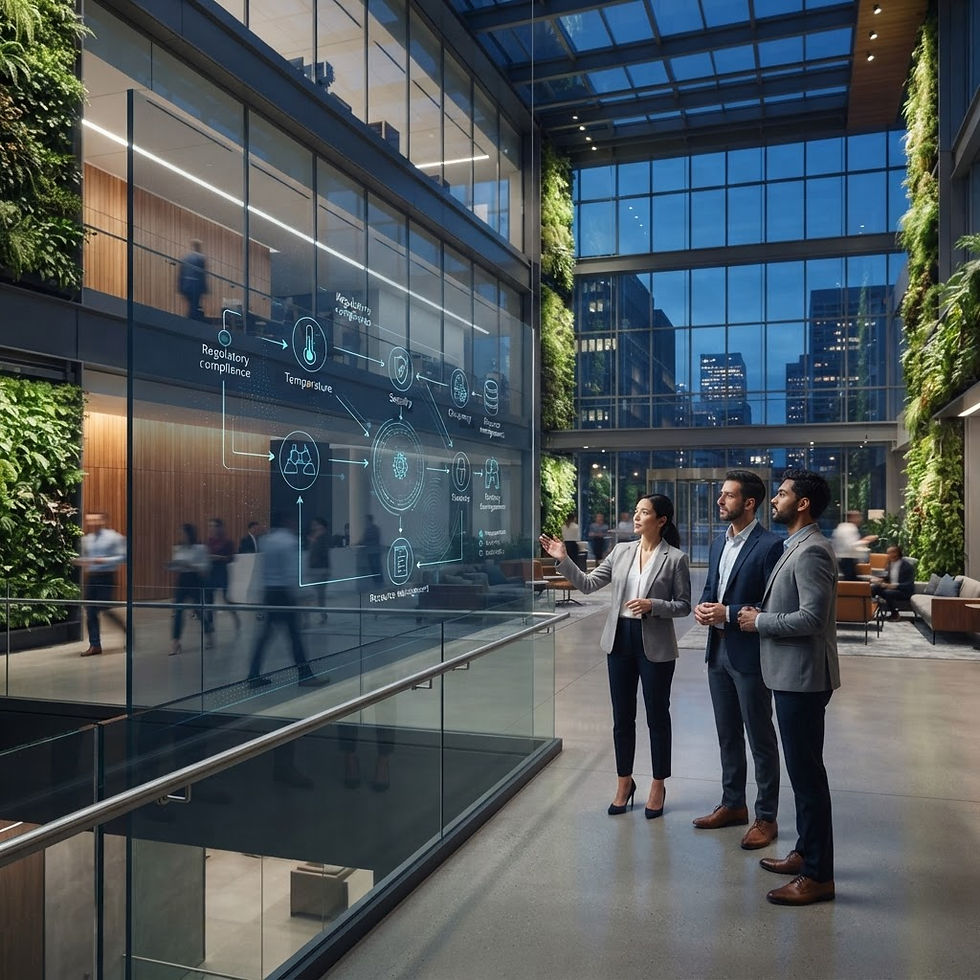
Data Privacy Concerns: Securing sensitive building and occupant data remains a top priority.
Complex Integration Processes: Smoothly incorporating AI with existing systems can be difficult and requires strategic planning.
Need for Skilled Personnel: The workforce must be adequately trained to manage and operate these advanced technologies.
Real estate firms must develop strategic approaches to overcome these challenges effectively.
Future Outlook
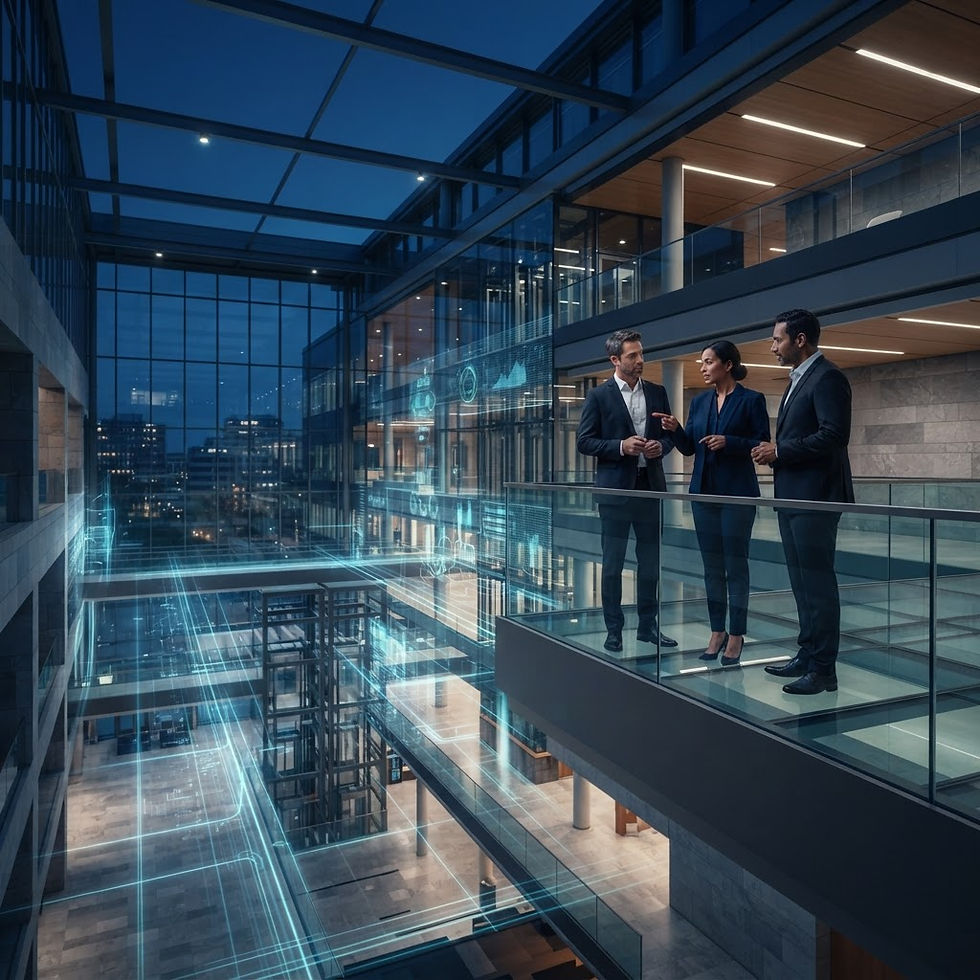
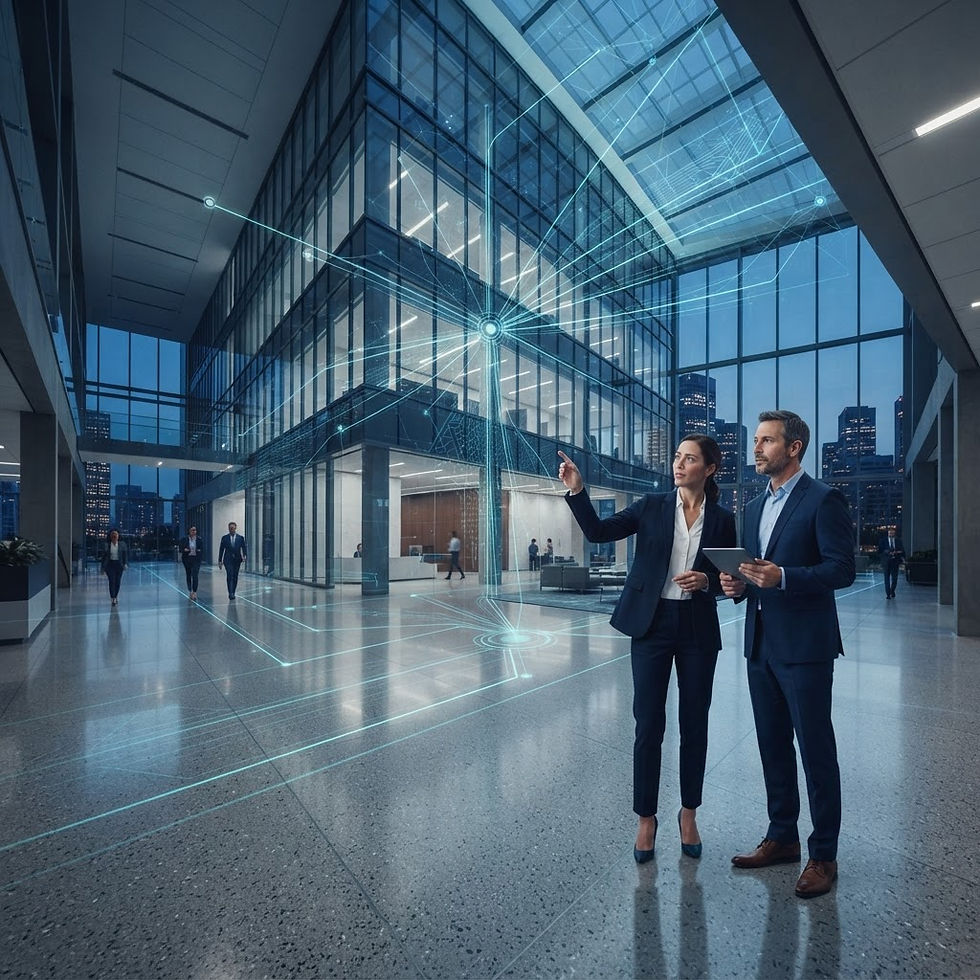
The outlook for AI in commercial real estate appears optimistic, with emerging trends set to shape the industry's future. Innovations such as digital twins—virtual representations of physical buildings—and enhanced IoT integration are anticipated to reshape performance metrics and management practices further. As these technologies continue to develop, understanding their implications will be critical for all stakeholders involved in commercial real estate, as projected by industry experts, including Cognitive Corp.
Conclusion
In conclusion, AI technologies are profoundly transforming commercial real estate, emphasizing sustainability and automation through innovative solutions. By adopting these advanced tools, businesses can increase operational efficiency and remain competitive in an ever-evolving marketplace. It is crucial for real estate stakeholders to embrace these innovations to shape a more sustainable future.
Keywords
AI facility management
Microsoft Azure AI
Cognitive Autonomous Agents
Building lifecycle optimization
Sustainable building technologies
Smart building automation
Commercial real estate AI solutions
Facility management AI
AI in real estate
Intelligent building systems
Digital twins
IoT integration
Energy management
Operational efficiency
Data privacy
Comments